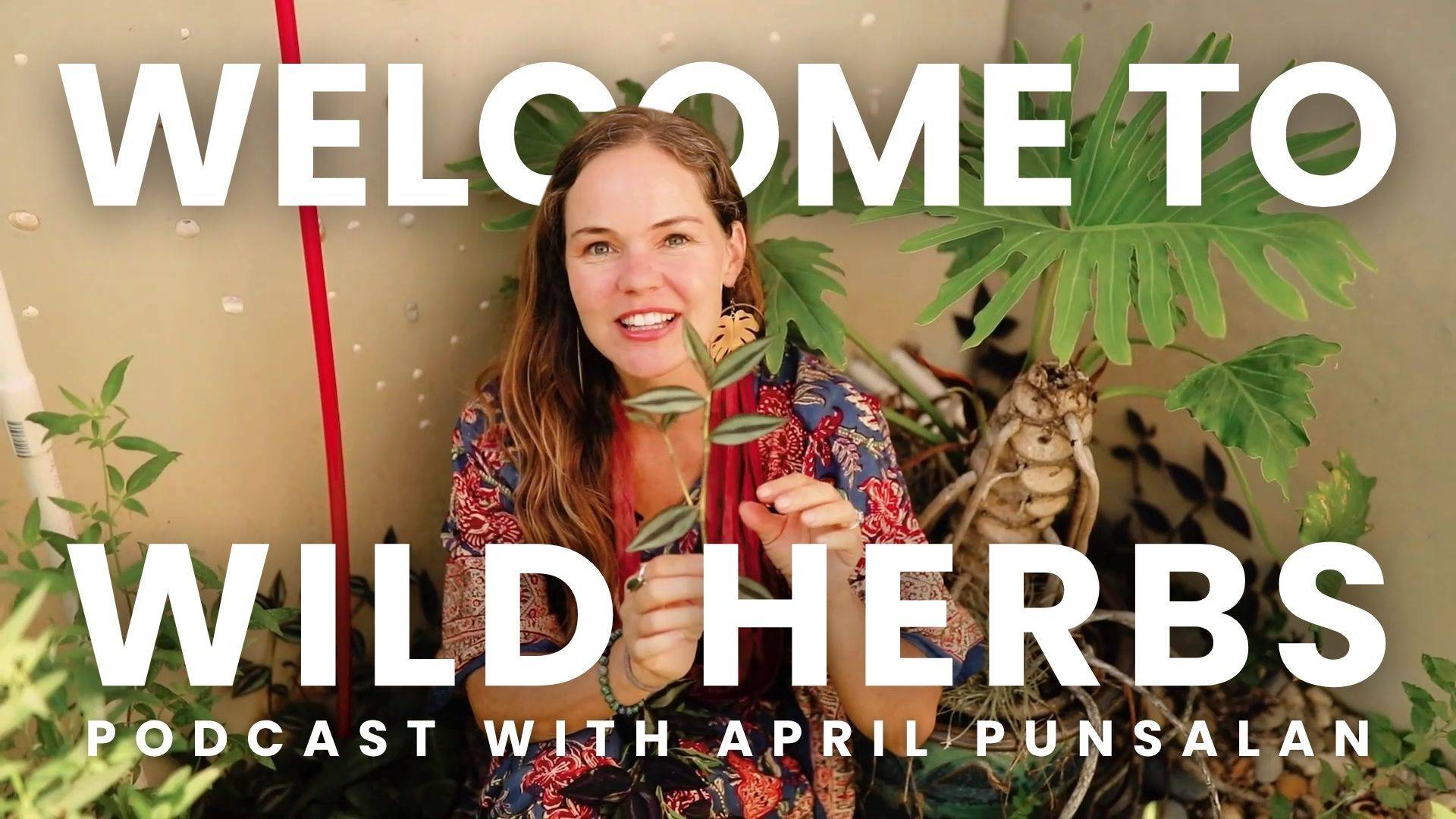
Why Every Herbalist Should Learn Medical Botany
Why Herbalists Need Medical Botany
You've done the training. You know your calendula, chamomile, echinacea, and goldenrod.
But the aster family alone holds 34,000 species.
In this episode, April shares why medical botany is the missing framework for trained herbalists. It was once the backbone of American healthcare, and today almost no one has heard of it.
In this episode:
- How April found medical botany. Fieldwork with botanist Richard Porcher led her to Charleston's Waring Historical Library, where she found shelves of medical botany texts and MD dissertations on single plants and regional floras.
- What medical botany actually is. It's the system doctors and eclectic physicians used in the 1700s and 1800s: classification, systematics, then medicine.
- What Latin names reveal. Phytolacca americana is decoded, and she explains why "officinalis" tells you a plant earned its place in the official pharmacopeia.
- The 4 out of 34,000 problem. Most herbalists work with a handful of asters while the native ones in their own yard go unknown.
- Why botany comes first. A federally threatened plant, swamp pink (Helonias bullata), ended up printed as a medicinal herb in a bestselling foraging book.
- The native asters in April's Charleston yard. She covers golden aster, sneezeweed, rabbit tobacco, and Bidens, and why Bidens is blooming while her echinacea struggles.
- Taste as the teacher. Ayurveda and herbal energetics let you read any wild plant as bitter, salty, astringent, or sweet, through your own constitution.
- Why this matters now. In April's words, "the most endangered thing right now is humans' connection to the land."
Plants mentioned:
- Pokeweed (Phytolacca americana)
- Calendula (Calendula officinalis)
- Dandelion (Taraxacum officinale)
- Swamp pink (Helonias bullata)
- Golden aster (Heterotheca)
- Sneezeweed (Helenium)
- Rabbit tobacco (Pseudognaphalium)
- Spanish needles (Bidens)
- Blue curls (Trichostema)
- Blanket flower (Gaillardia pulchella)
- Eastern horsemint (Monarda punctata)
- Lamb's quarters, muscadine, and maypop
Resources mentioned:
- Resources of the Southern Fields and Forests by Francis Peyre Porcher
- Julia Morton's work on Lowcountry folk medicine
- Waring Historical Library and its medicinal plant garden (MUSC, Charleston, SC)
- Foraging Wild Herbs: 30 Healing Plants of the Carolina Coast by April Punsalan
Ready to learn the plants beneath your feet?
Enrollment for Medical Botany: Mastery of the Flowering Plant Medicines is Open
Know the land before the jar. 🌿
Follow and Subscribe to Be Notified When the Next Podcast Releases